
How to Plan a Micro Persian Wedding Ceremony in Washington DC
A complete guide to the sofreh aghd, the canopy ritual, blending cultures, and why intimate weddings are the perfect setting for Persian tradition
At Tiny Wedding Collective, we’ve had the privilege of planning and documenting some of the most meaningful intimate ceremonies in the Washington DC area - and few have stayed with us the way a beautifully executed Persian wedding ceremony does. There is something about the sofreh aghd, the canopy, the honey, the poetry, that simply lands differently when it happens in a room of fifty people who are paying attention rather than a ballroom of three hundred who aren’t.
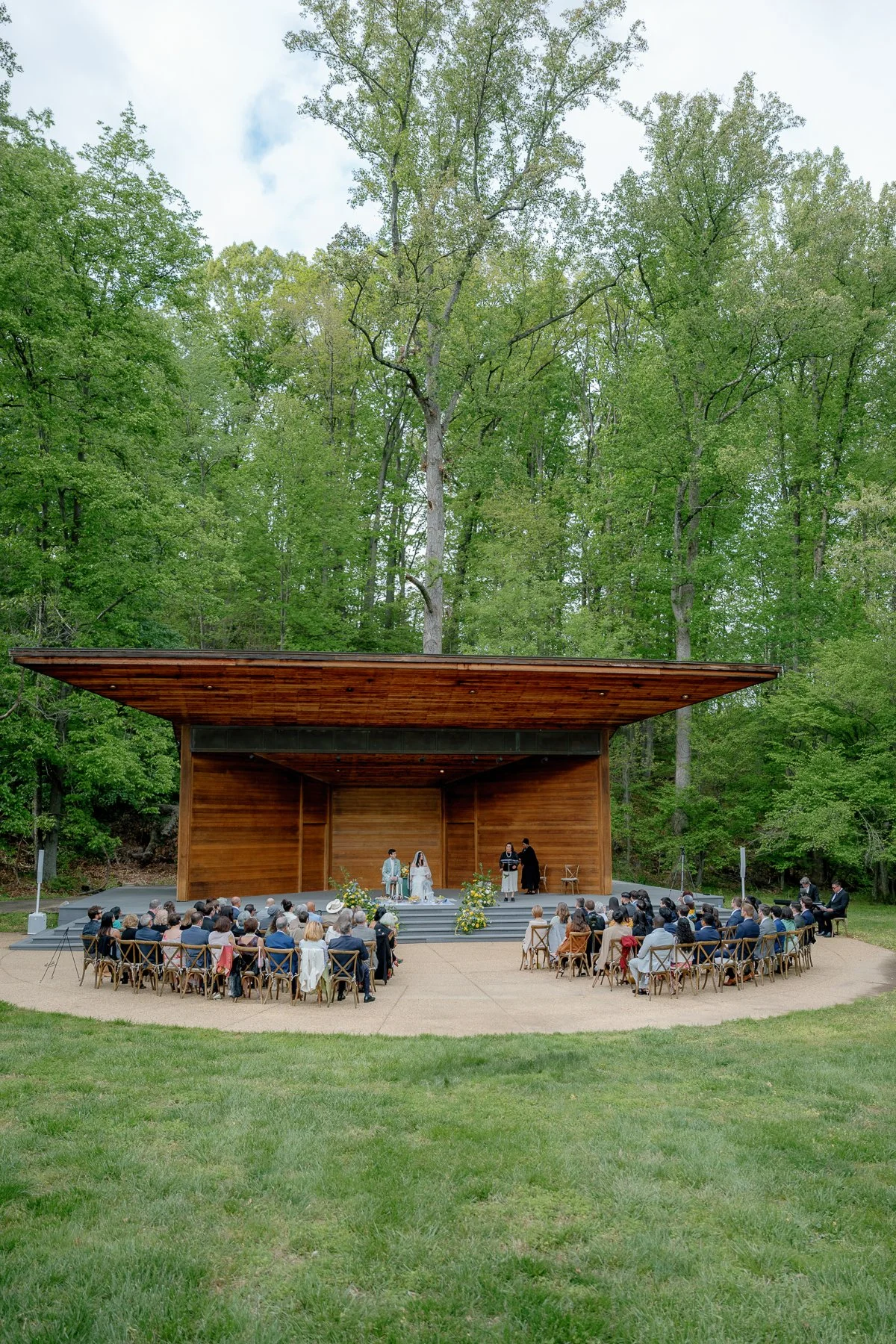
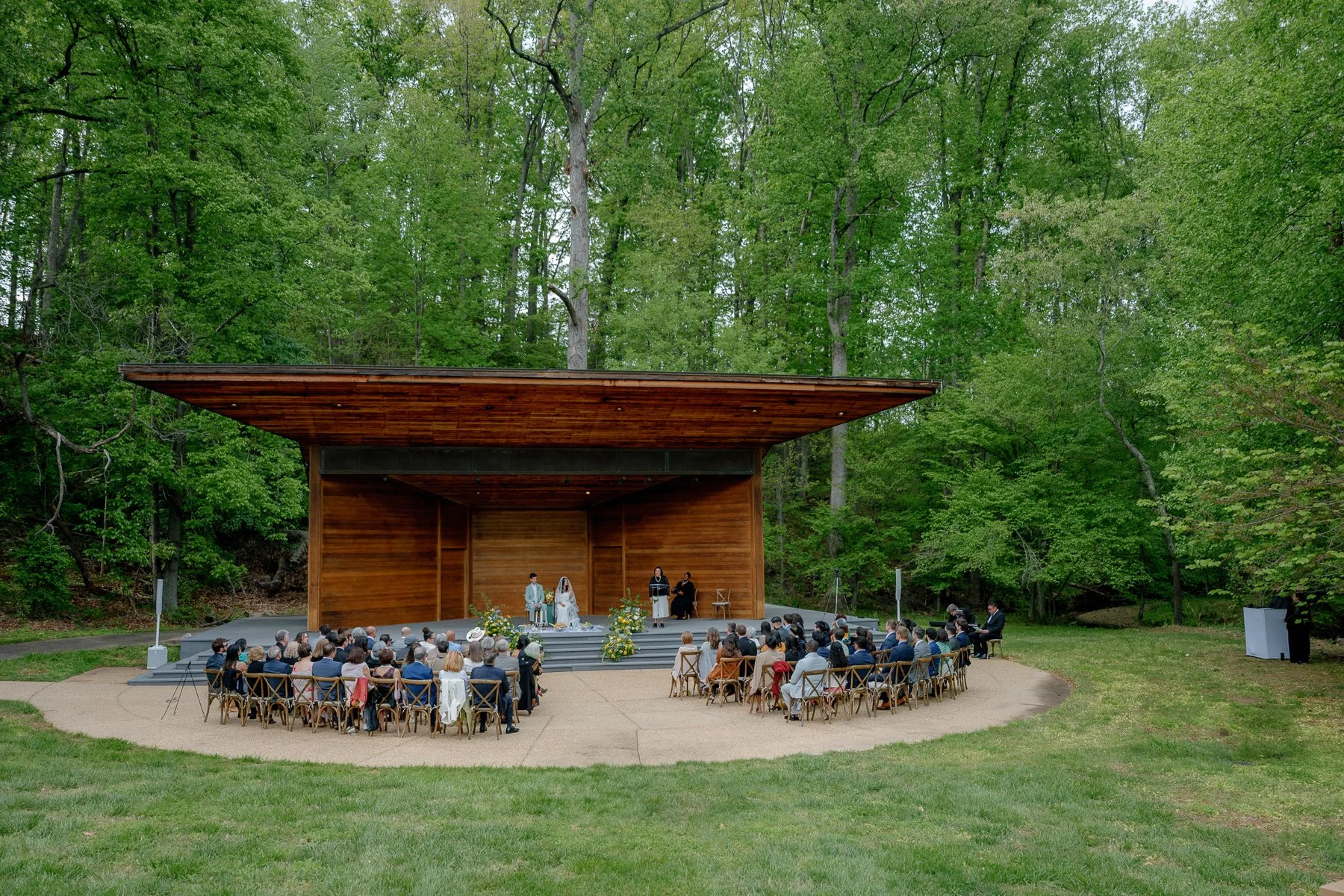
The micro Persian wedding is not a compromise. It is, in many ways, the fullest expression of what this tradition was always designed to be: close, intentional, and felt. We recently planned K and S's multicultural micro wedding at Wolf Trap National Park in Virginia - a Persian and Mexican ceremony beneath an open wooden pavilion surrounded by spring forest - and it is the wedding we point to when couples ask us what is possible when you go small on purpose.
WHAT IS A PERSIAN WEDDING CEREMONY?
A traditional Persian - or Iranian - wedding ceremony is called an aghd. It is a formal, intimate ritual with roots that predate Islam, stretching back to Zoroastrian tradition, making it one of the oldest continuous wedding ceremonies still practiced today. At its center is the sofreh aghd: a ceremonial spread of symbolic objects arranged on a cloth, in front of which the couple sits to be married.
The aghd is presided over by an officiant - traditionally a female elder from the family - and is attended most closely by the couple's loved ones. Guests witness rather than participate, which makes it exceptionally well-suited to an intimate guest count.
THE SOFREH AGHD: A COMPLETE GUIDE
The sofreh aghd is the visual and spiritual heart of a Persian wedding ceremony. The word sofreh means "spread" or "tablecloth," and aghd means "marriage contract." Together they describe a carefully curated arrangement of objects - each carrying centuries of symbolic meaning - laid out on a cloth before the ceremony begins.
There is no single correct sofreh. Families incorporate heirloom pieces, regional variations, and personal touches. But the core elements remain consistent, and each one deserves to be understood before it is placed.
AS SEEN AT S+K’S MICRO WEDDING AT WOLF TRAP IN VIRGINIA:
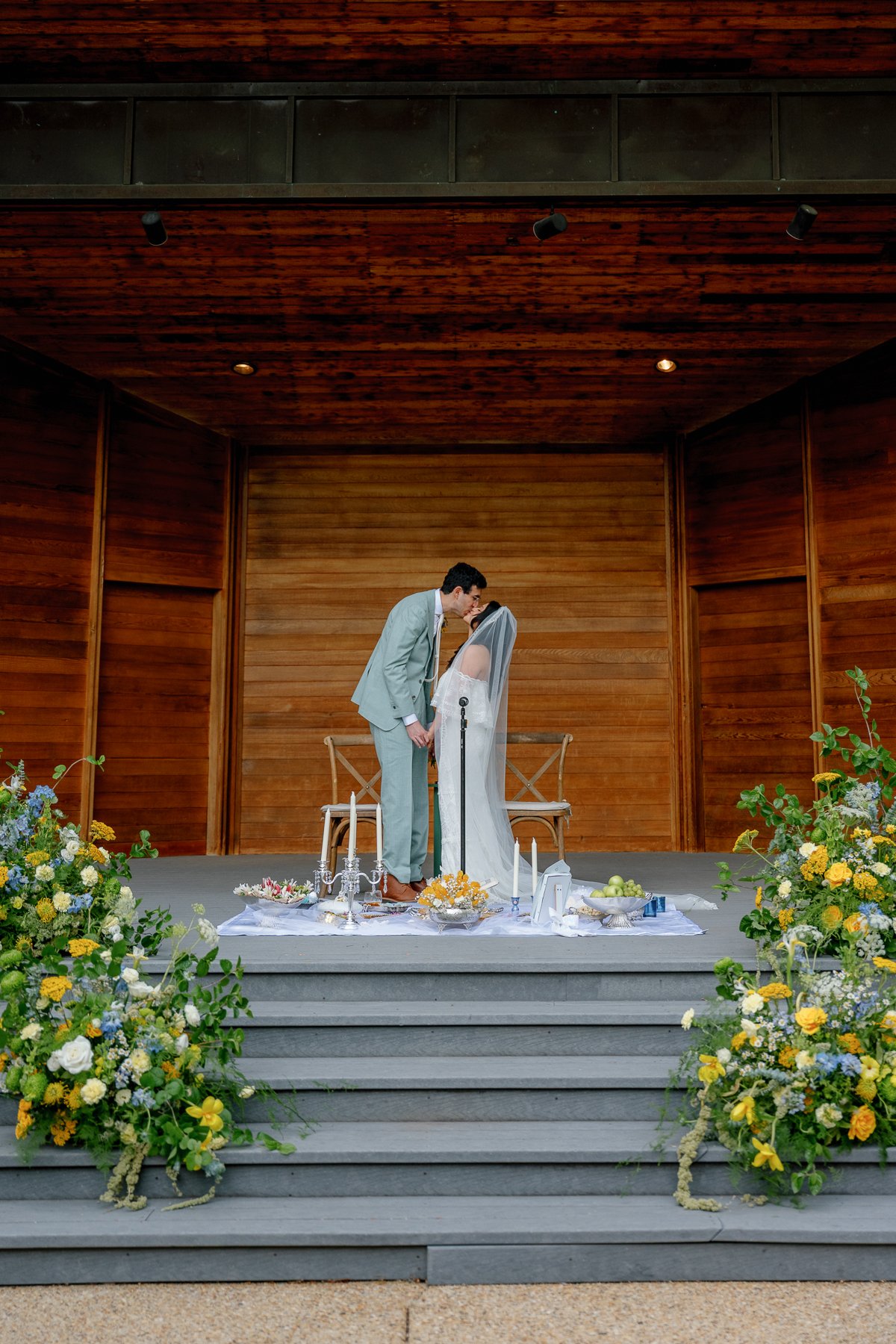
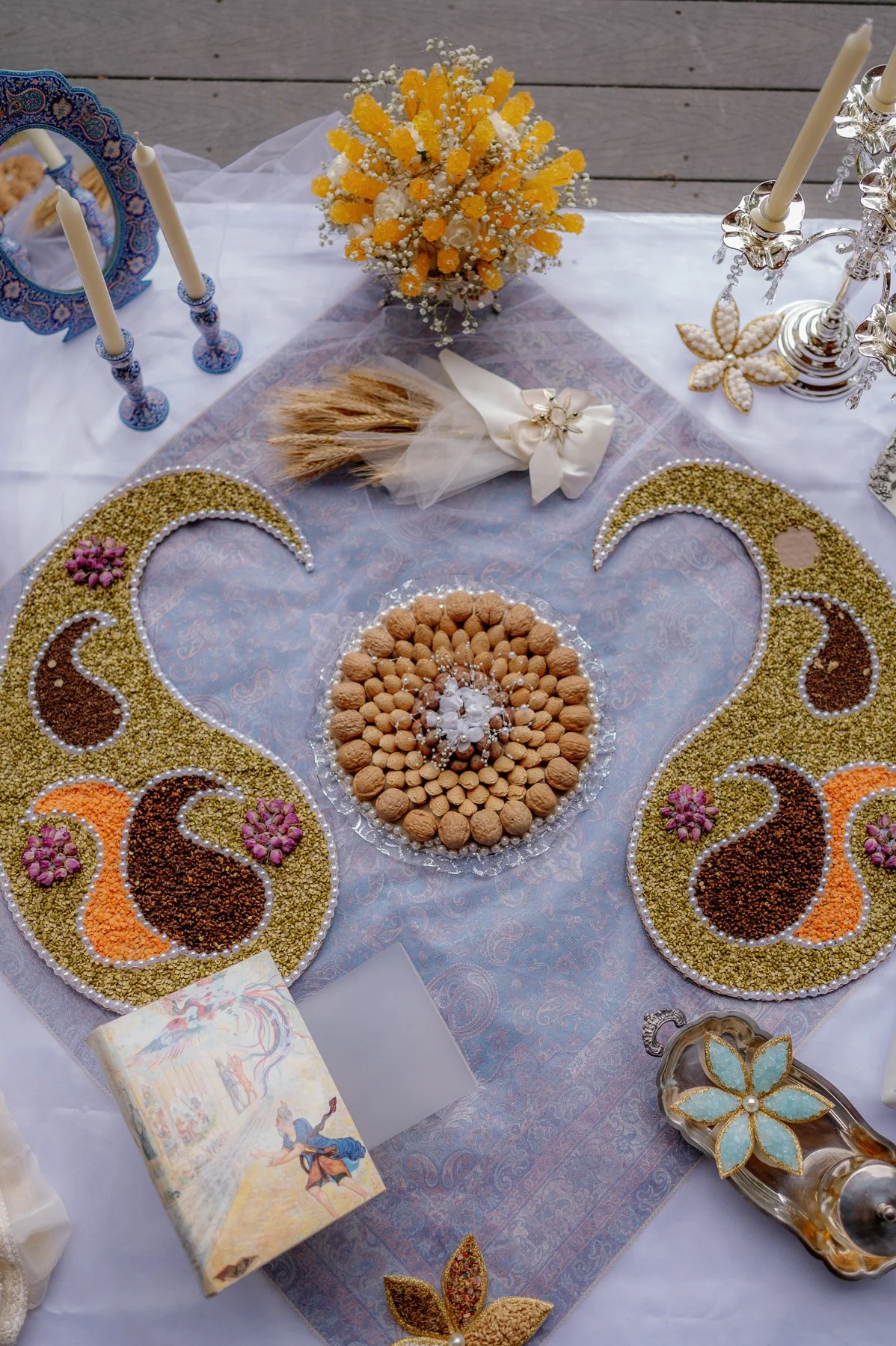
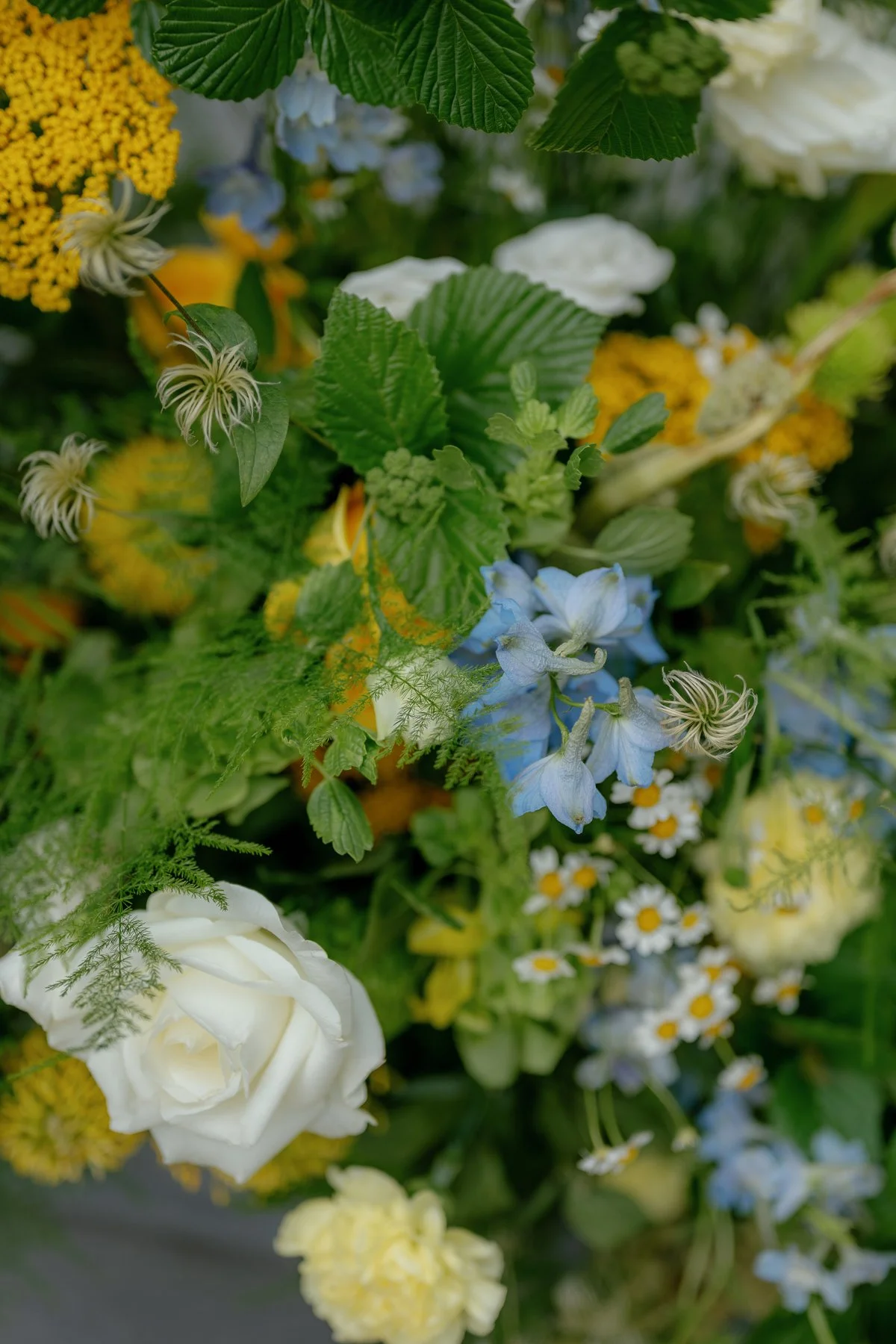
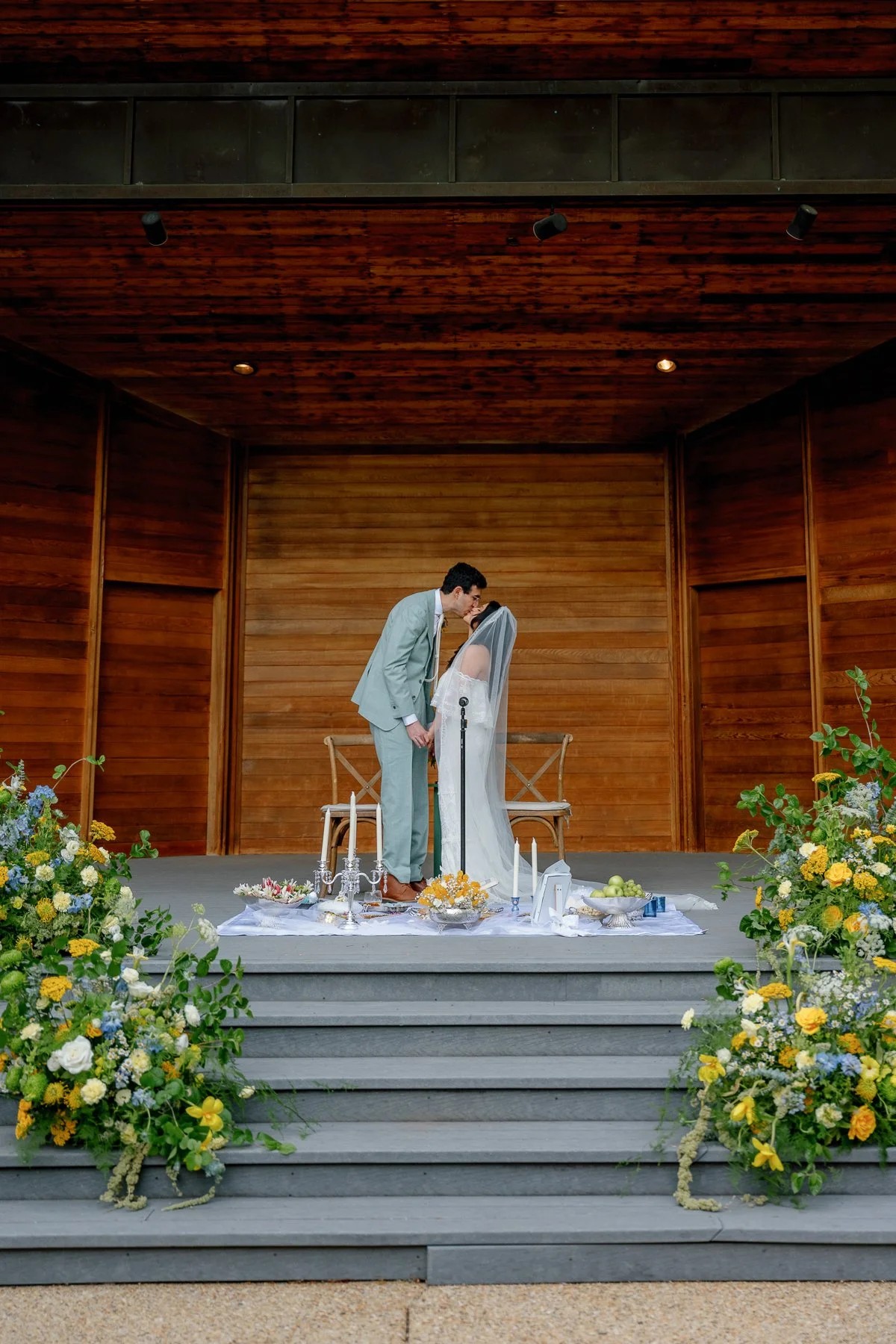
K and S's sofreh was laid on a delicate blue-toned paisley termeh edged in pearl beading, with ornate silver candelabras, a central dish of walnuts and almonds, an illustrated book of Hafez poetry, and a small bouquet of saffron-yellow dried blooms.
THE ELEMENTS AND THEIR MEANING
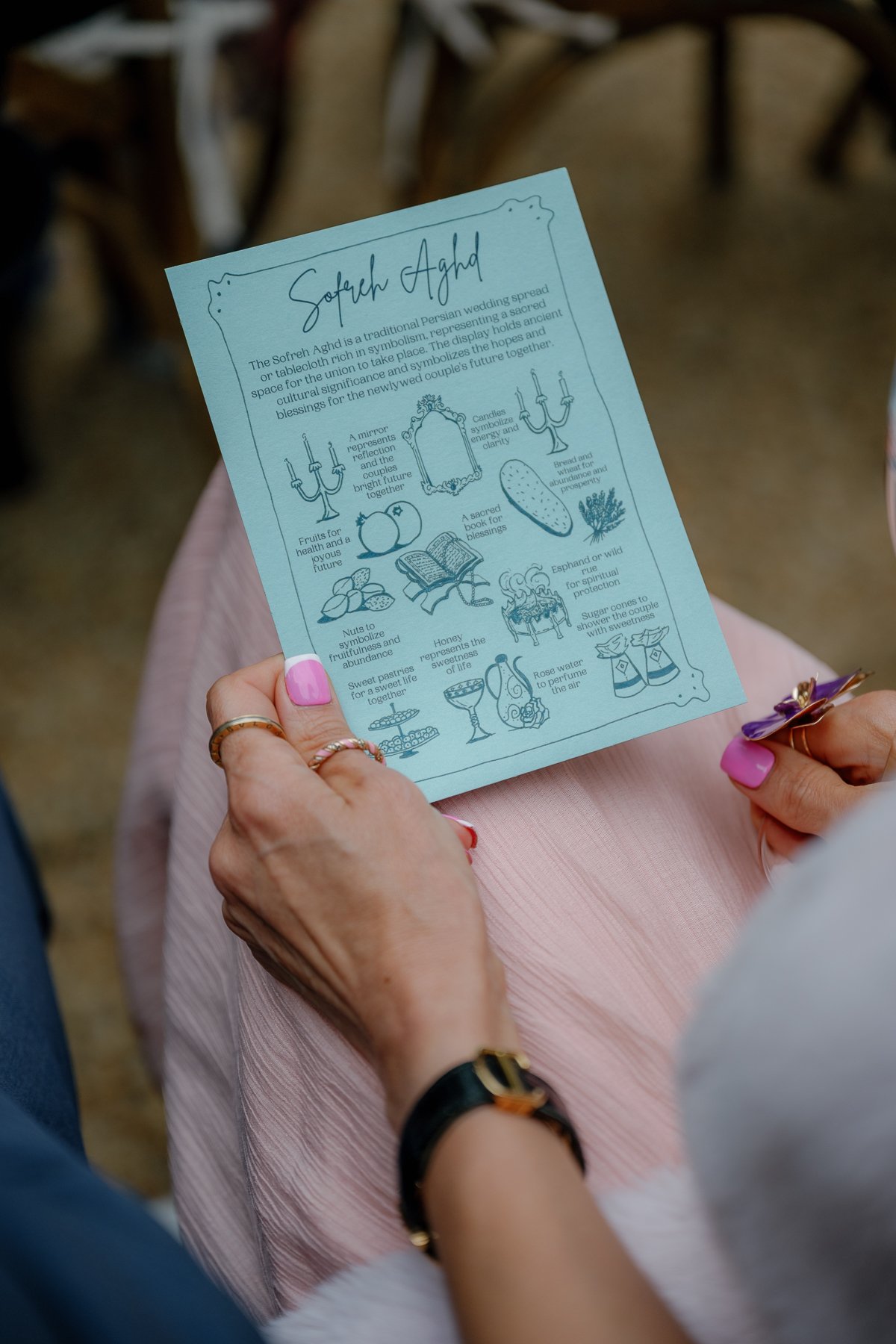
Ayneh va Shamdoon OR Mirror and candelabras: Placed at the head of the spread, the mirror reflects light and clarity into the couple's future. The candles — always lit during the ceremony — represent warmth and the fire of Zoroastrian tradition. Candelabras are often ornate silver family heirlooms.
Termeh OR The cloth itself: The sofreh is laid on a termeh — a richly woven fabric, often in jewel tones with paisley or botanical patterns. In many families this cloth is passed through generations. K and S used a blue paisley cloth edged in pearl — intricate, personal, and stunning on camera.
Sabzeh OR Sprouted wheat or herbs. Fresh sprouted greens, fenugreek, or wild herbs represent growth, vitality, and the freshness of new life together.
Nan-e Sangak OR Flatbread: A large piece of traditional Persian flatbread, often decorated with seeds spelling out blessings, represents prosperity and the sustenance the couple will provide for one another.
Ajoeel OR Mixed nuts and dried fruits: Walnuts, almonds, pistachios, and dried apricots arranged in a dish symbolize abundance and good fortune. At K and S's ceremony, this was displayed in a beautifully arranged central dish that anchored the entire spread.
Asal OR Honey: One of the most beloved moments of the aghd: after the vows, bride and groom each dip a finger into honey and offer it to the other to taste — a wish for sweetness in the life ahead. Simple, intimate, and unforgettable in a small ceremony.
Tokhm-e Morgh OR Decorated eggs: A symbol of fertility and new beginnings, often painted or adorned with flowers and placed among the other objects on the spread.
Sekkeh OR Gold coins: Placed in a decorative dish, coins represent financial security and the prosperity the couple wishes for their shared household.
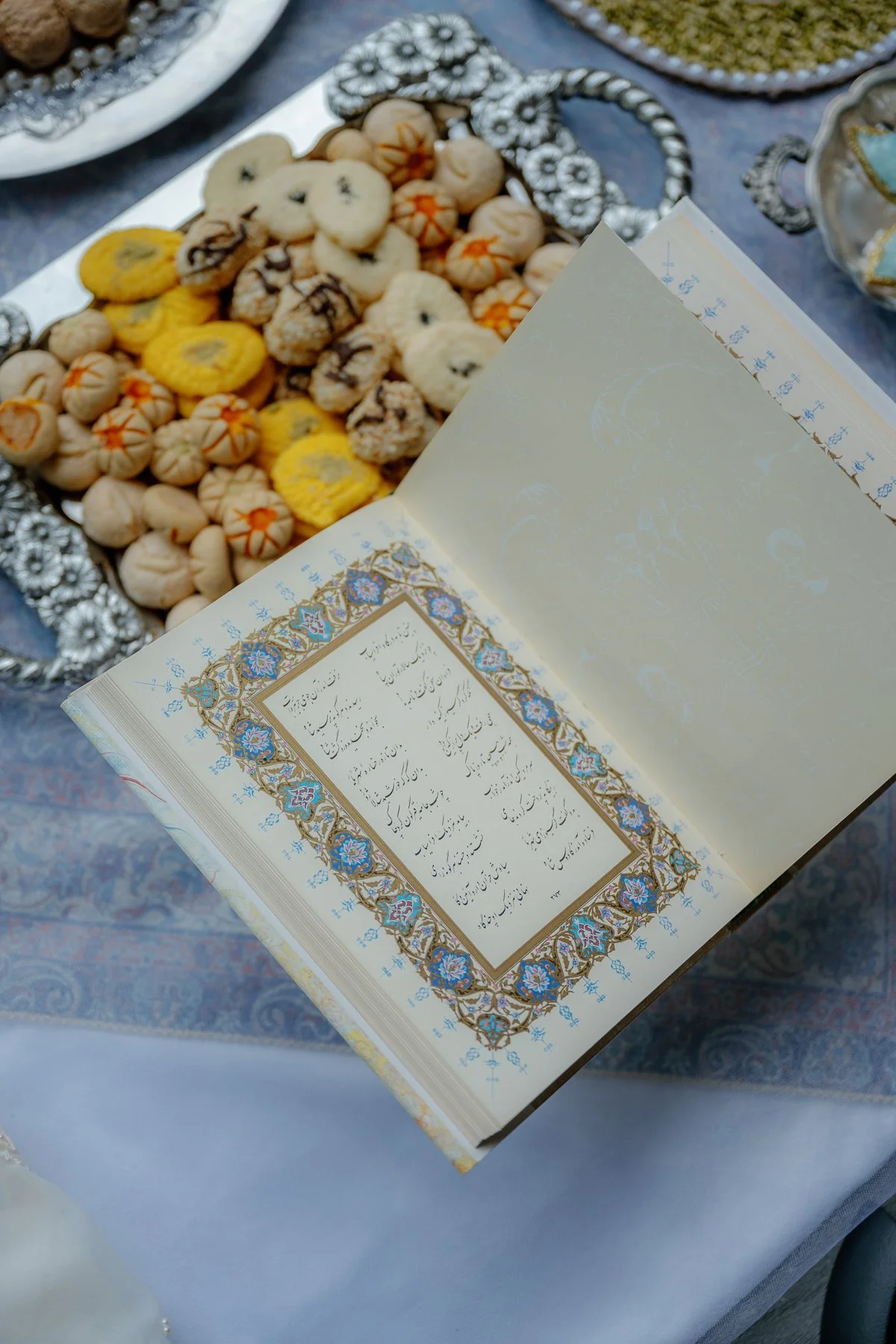
Shirini OR Sweets and pastries: Baklava, noghl (sugar-coated almonds), and other confections are placed on the sofreh and shared with guests after the ceremony — a literal sweetening of the occasion.
Divan-e Hafez OR A book of Persian poetry: The 14th-century Sufi poet Hafez is traditionally included for his wisdom and his use in fal — poetic divination. The officiant may open to a random verse and read it as a blessing. K and S had a beautifully illustrated copy on their sofreh.
Esfand OR Wild rue seeds: Sometimes burned before the ceremony begins to ward off the evil eye and protect the couple as they step into their new life.
A TINY WED CO TIP: Many sofreh elements can be sourced from Persian grocery stores in the DC area or ordered from specialist vendors who assemble and style them. If you have family members looking for a meaningful role in your micro wedding, ask them to source or style specific objects — it becomes one of the most personal contributions anyone can make.
THE CANOPY RITUAL: THE MOMENT EVERYONE ALWAYS REMEMBERS
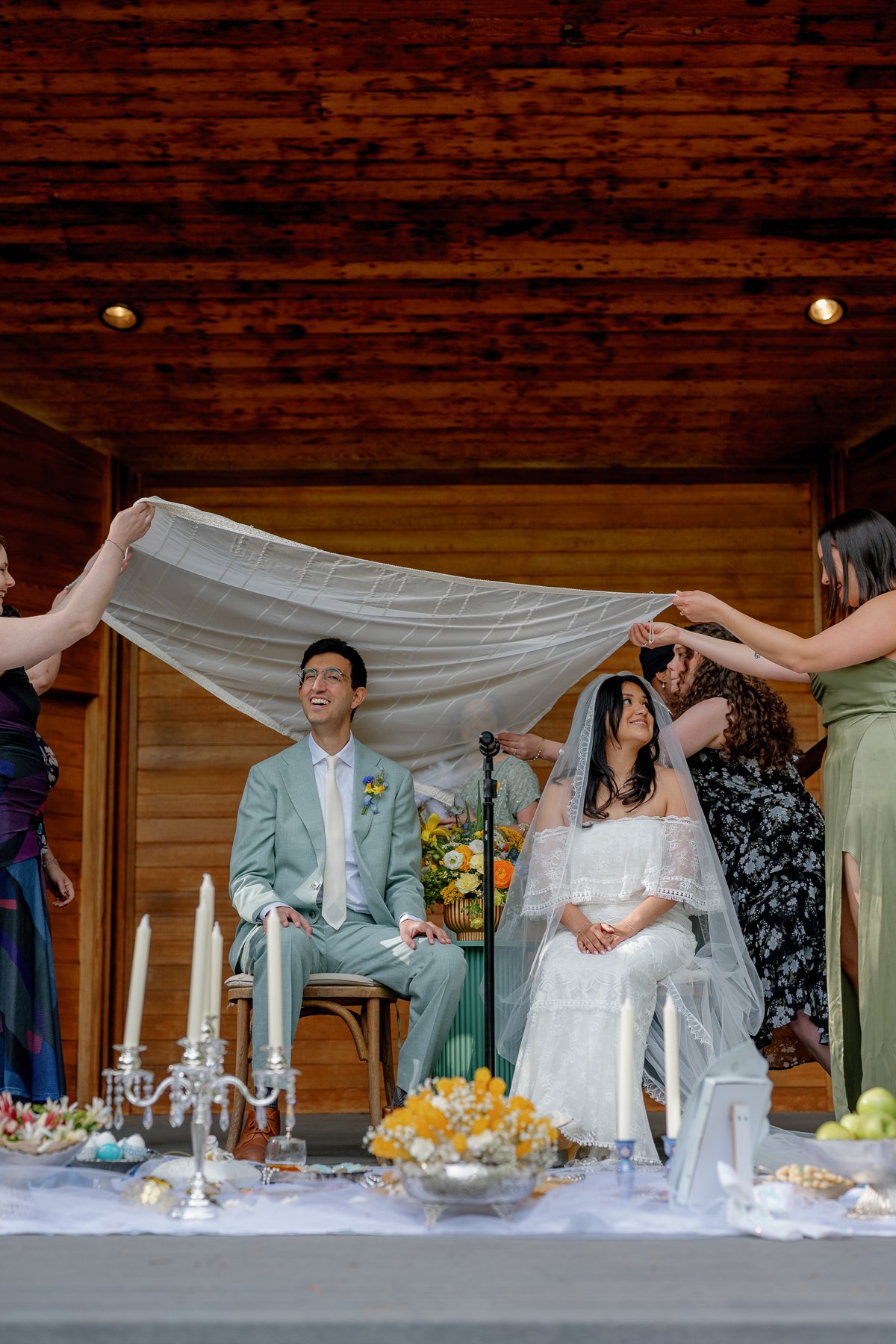
Once the couple is seated before the sofreh, one of the most visually powerful moments of the Persian ceremony begins: the holding of the cloth canopy.
A large, fine white fabric - often sheer or lace - is held over the couple's heads by married women from their families. While it is held aloft, two family members grind sugar cones together above it, allowing sweetness to shower symbolically down onto the cloth and, by extension, onto the couple beneath. The grinding is an act of blessing: the sugar represents the sweetness being wished into their marriage.
The women chosen to hold the canopy are selected with intention. They are married women whose unions are considered happy and stable, their presence lending those qualities to the couple beginning their own marriage. In a micro wedding setting, this moment is exceptionally powerful. Every face in the room is close enough to be seen. Every hand holding the cloth belongs to someone who matters.
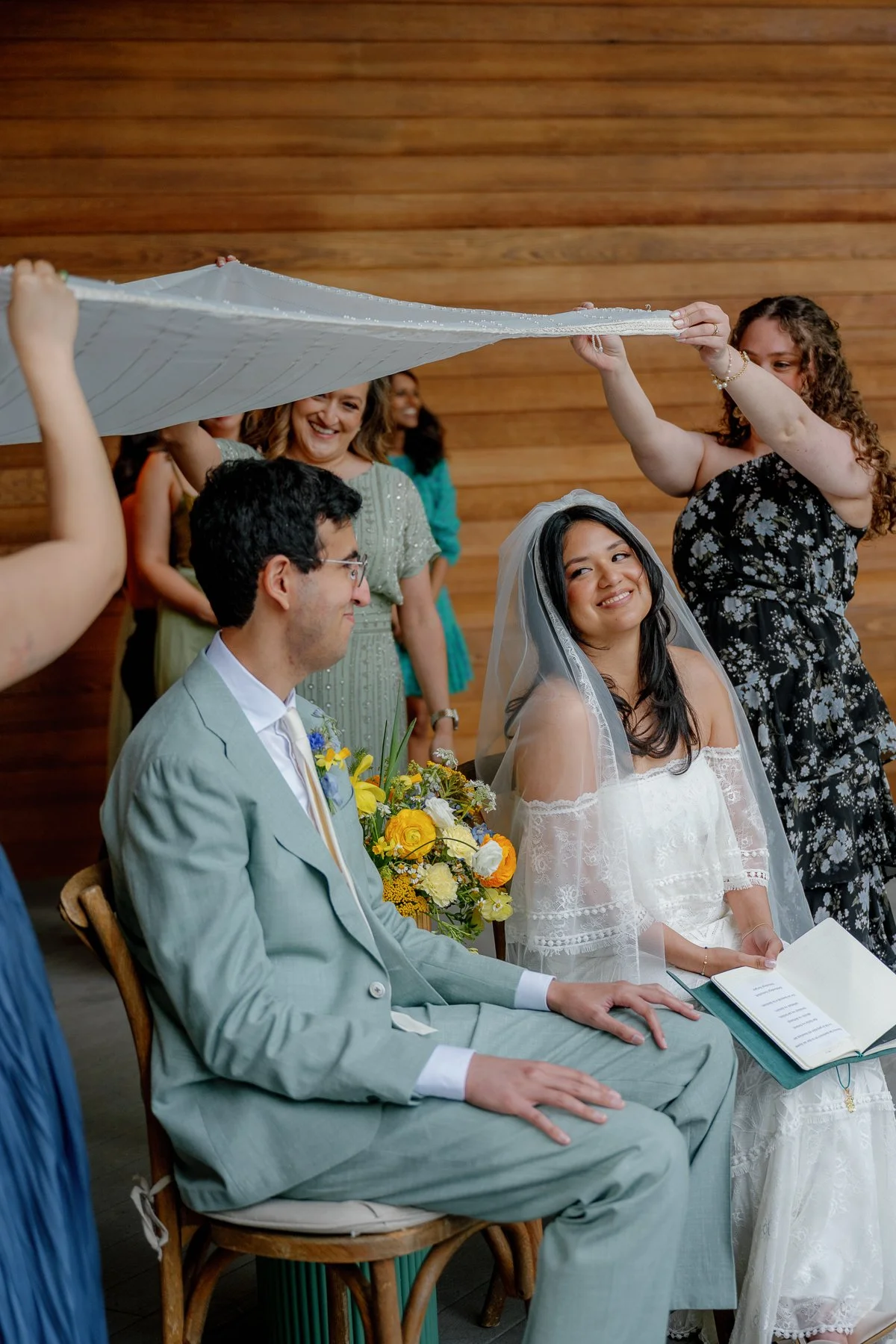
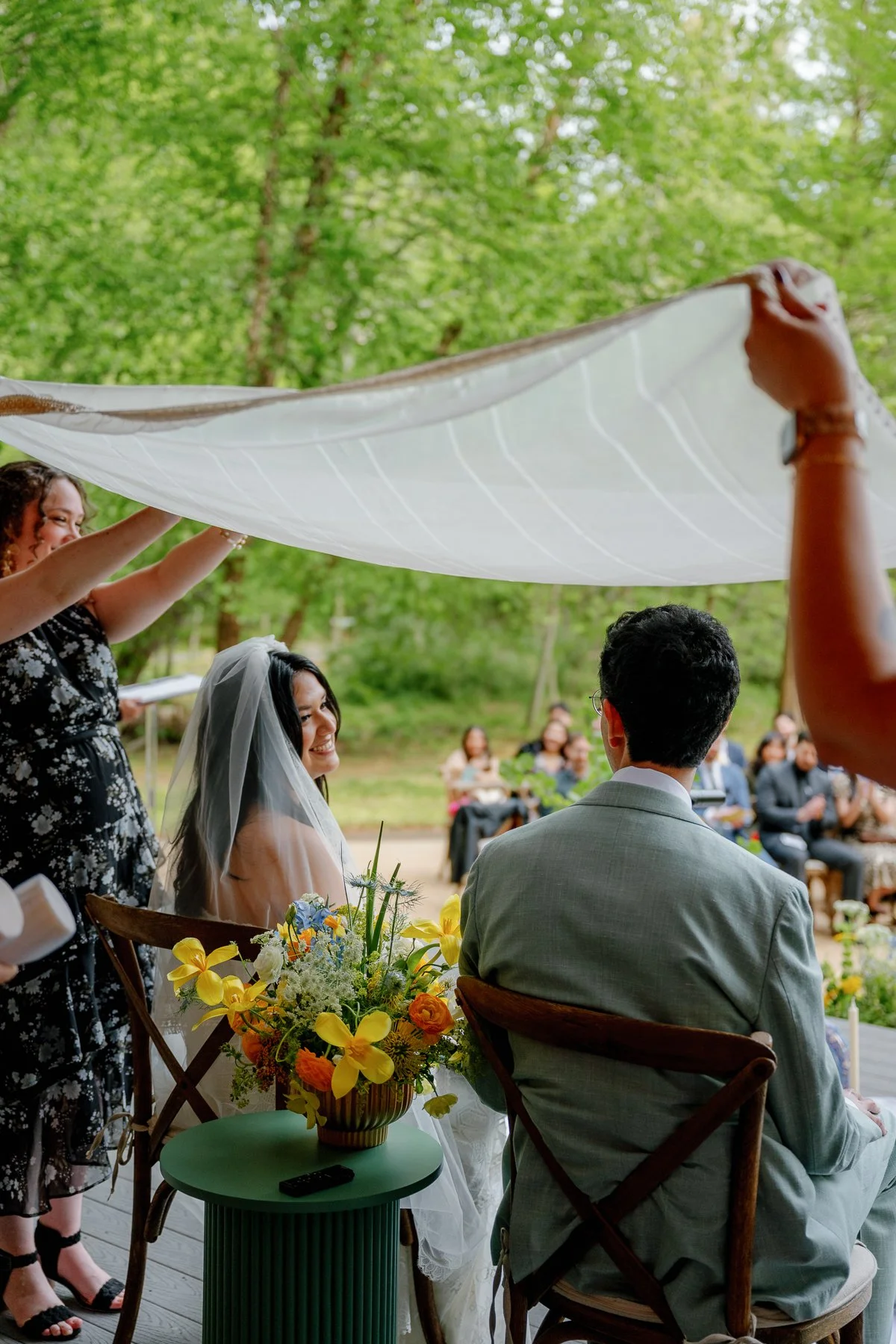
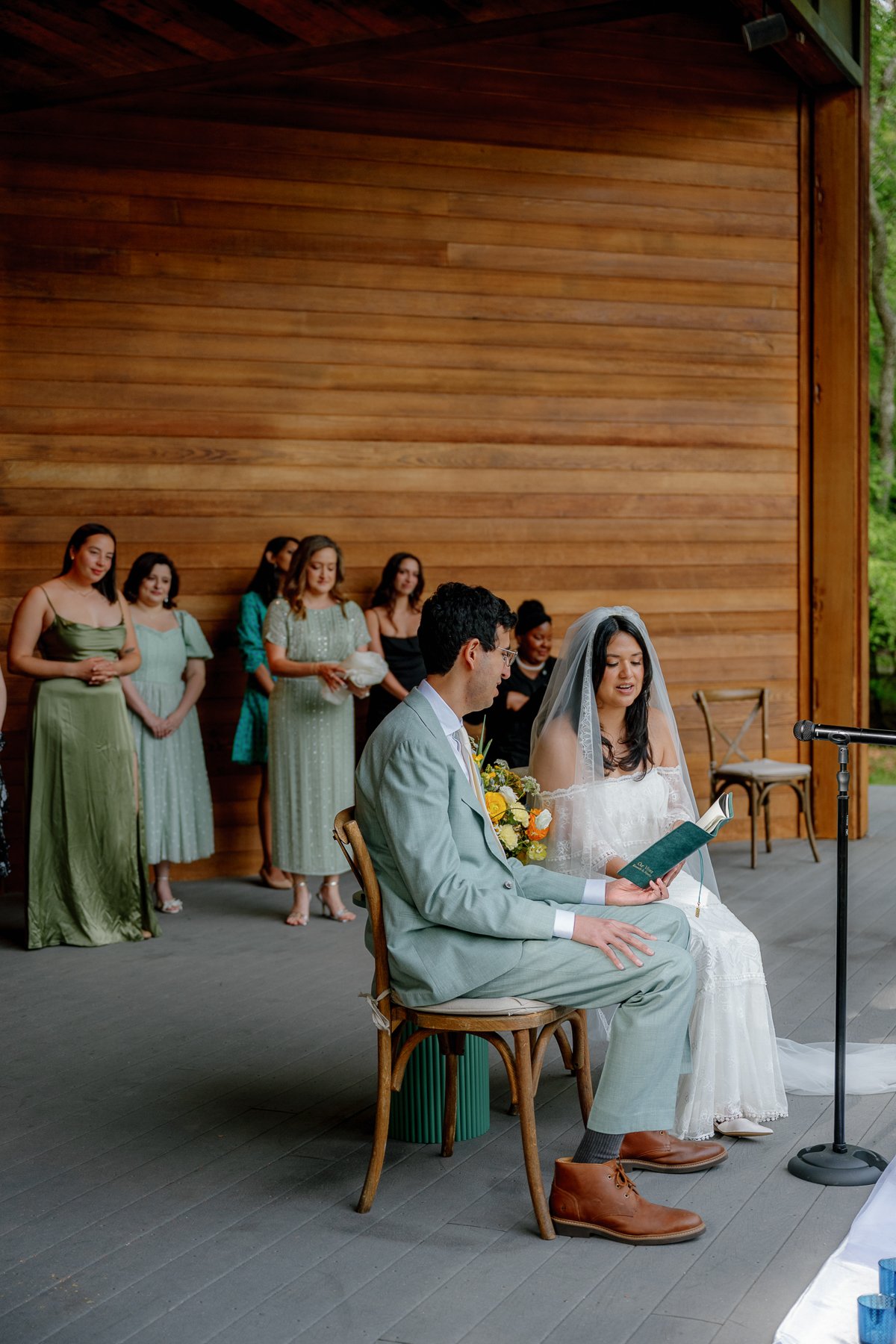
In a micro wedding, every hand holding the canopy belongs to someone who matters — and every face in the room is close enough to see it.
THE VOWS AND THE BALE MOMENT
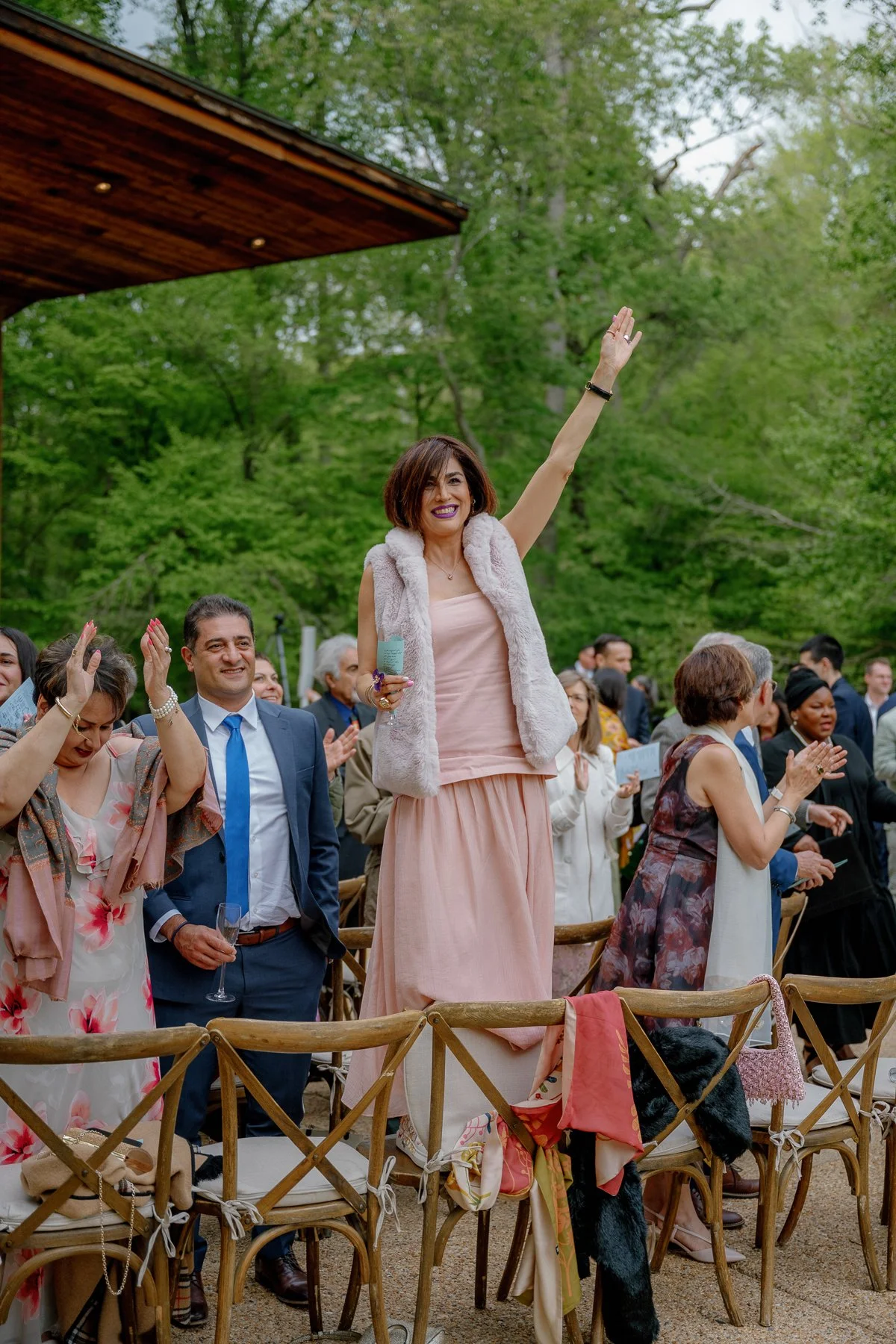
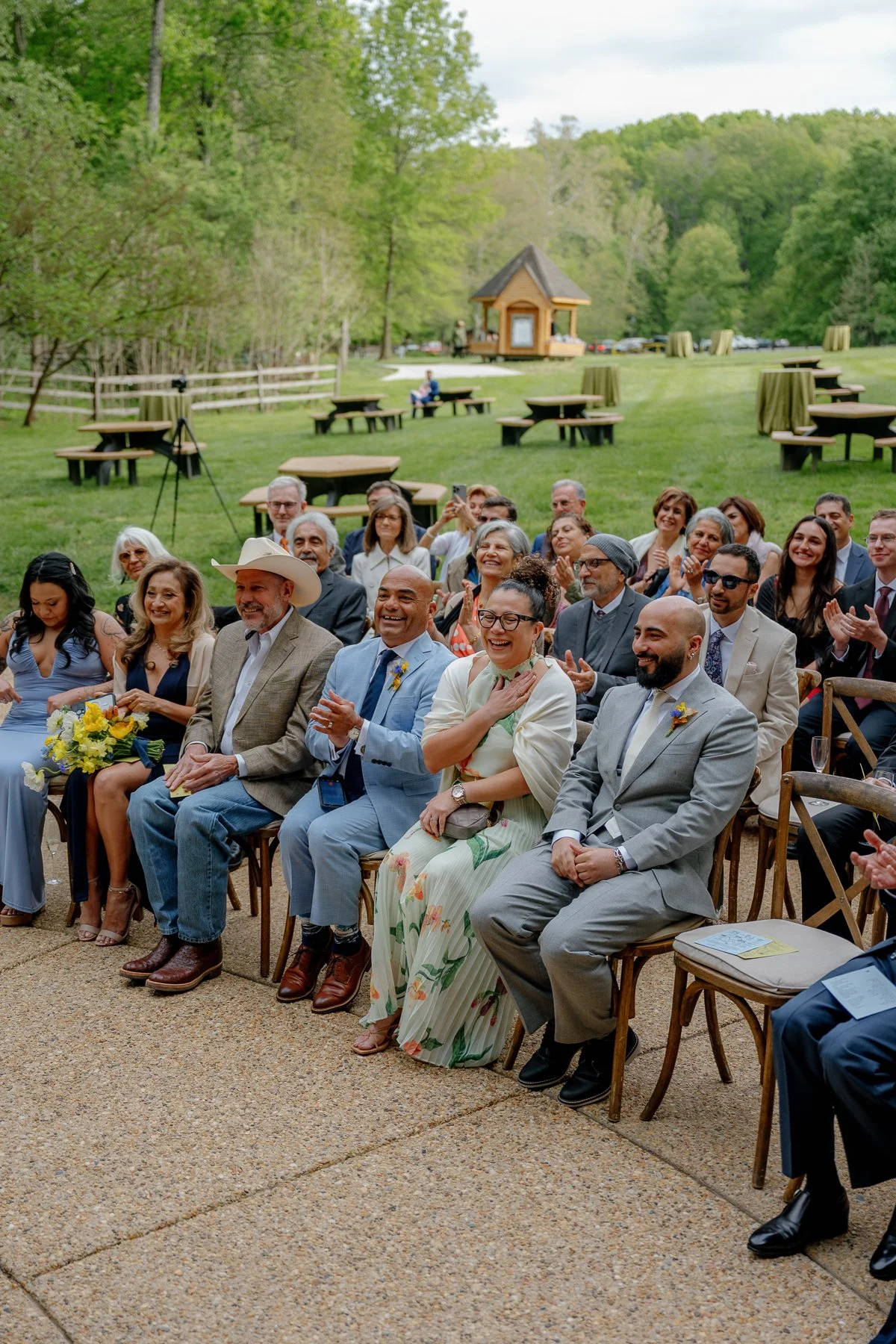
During the aghd, the officiant asks the groom whether he takes the bride - and by tradition, she does not answer immediately. The guests call out that she has gone to gather flowers, or is admiring herself in the mirror, or simply is not ready yet. This is a playful, centuries-old ritual that gives the bride the power to make him wait before she finally says bale: yes. It always gets a laugh. It always gets a cheer. In a room of fifty intimate guests, it becomes an eruption.
The couple then exchanges rings, shares the honey, and the ceremony closes with readings, blessings, and often a verse from Hafez opened at random - whatever the poet has to say to this couple, on this day.
BLENDING TWO CULTURES AND HOW TO DO IT SEAMLESSLY
One of the most common questions we receive at Tiny Wedding Collective is how to plan a wedding ceremony that genuinely honors two different cultural backgrounds - not as a compromise, but as a full celebration of both. K and S's Washington DC area micro wedding is the answer we give.
She is Mexican. He is Persian. Their ceremony included a complete sofreh aghd, the canopy ritual, and a western structure woven throughout - co-officiated by two people who had done the work of understanding each other's tradition before the day arrived. Here is how to replicate that.
Hire two officiants who genuinely want to collaborate: The single most important decision in a multicultural intimate ceremony is who stands up front. You need two officiants - one for each tradition - who are not merely willing to share a stage, but who are curious about the other ceremony. Book a joint planning call early. Let them ask each other questions. The ceremony K and S had felt seamless because their officiants had done that work before the day arrived.Build one ceremony arc, not two ceremonies stitched together: Work with both officiants to map out a single narrative flow. Where does the western structure give way to the aghd? Are there readings or moments of music that can serve both traditions simultaneously? The transitions should feel intentional - not like a gear change between two separate events.
Explain each ritual to guests as it unfolds: Not everyone in the room will know what a sofreh aghd is, or why the bride delays her yes, or what the canopy represents. Brief, warm explanations woven into the ceremony or having a printed program for each guest transforms ritual into revelation. In a micro wedding, where guests are close and attentive, this lands with particular force.
Let culture carry through the whole day, not just the ceremony: K and S extended their cultural story beyond the ceremony: Mexican bites at cocktail hour, a Persian restaurant in McLean for dinner and dancing. The whole day became a portrait of who they each are. Think about how food, music, and venue can quietly carry that story forward without announcement.
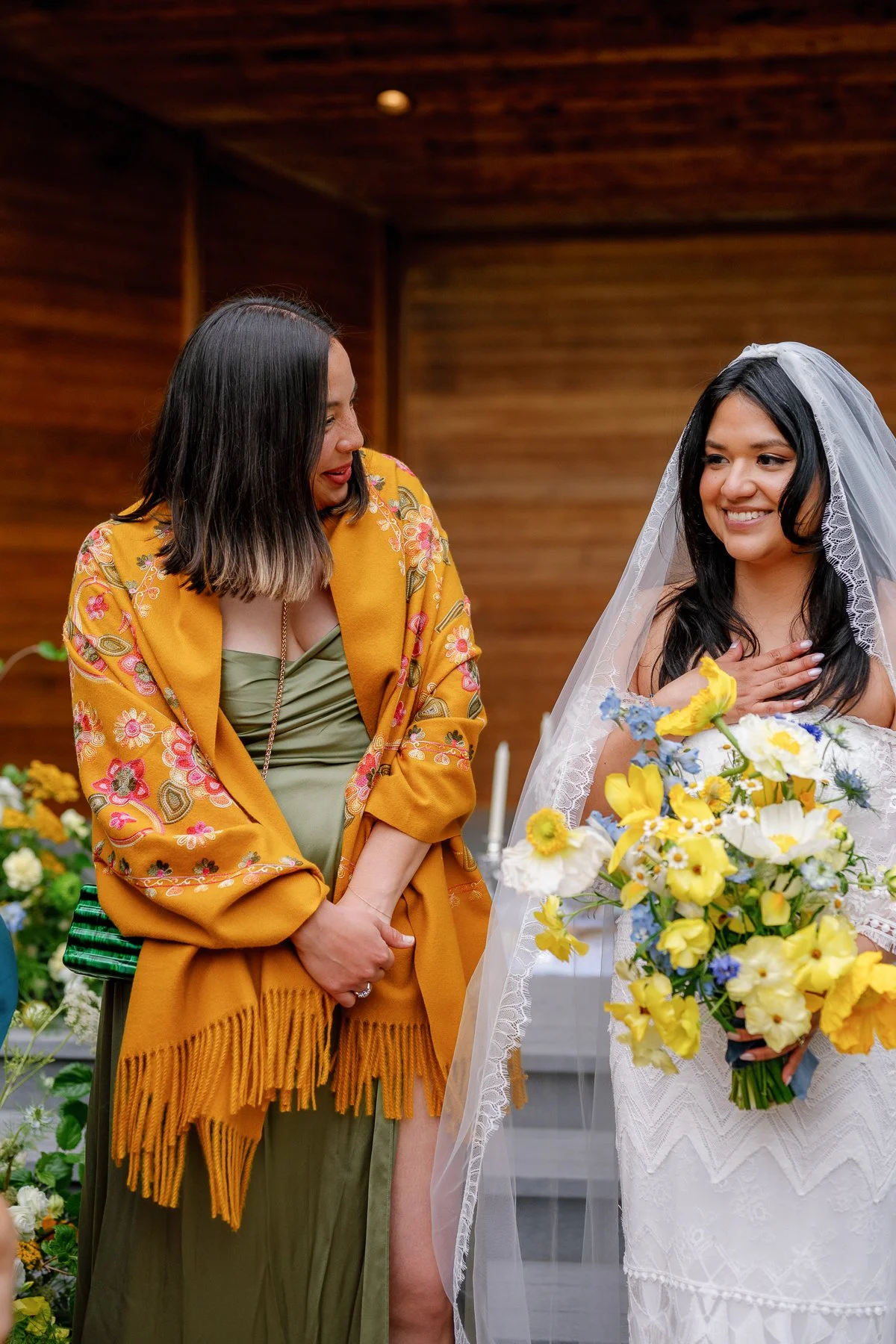
Give both families named, meaningful roles: In the Persian ceremony, the women who hold the canopy are chosen with intention. Giving family members a specific, culturally grounded role - rather than a seat in the front row - brings both sides into the ritual and creates moments of genuine emotional weight that a larger wedding simply cannot replicate.
“A multicultural ceremony works when both partners are genuinely curious about each other’s tradition - not just accommodating it. If you are planning a micro Persian wedding in the DC area and your partner comes from a different background, spend time with the sofreh before the day arrives. Understand what each object means. Let it move you. That curiosity is what guests will feel in the room - and what photographs will hold long after the day is over.”
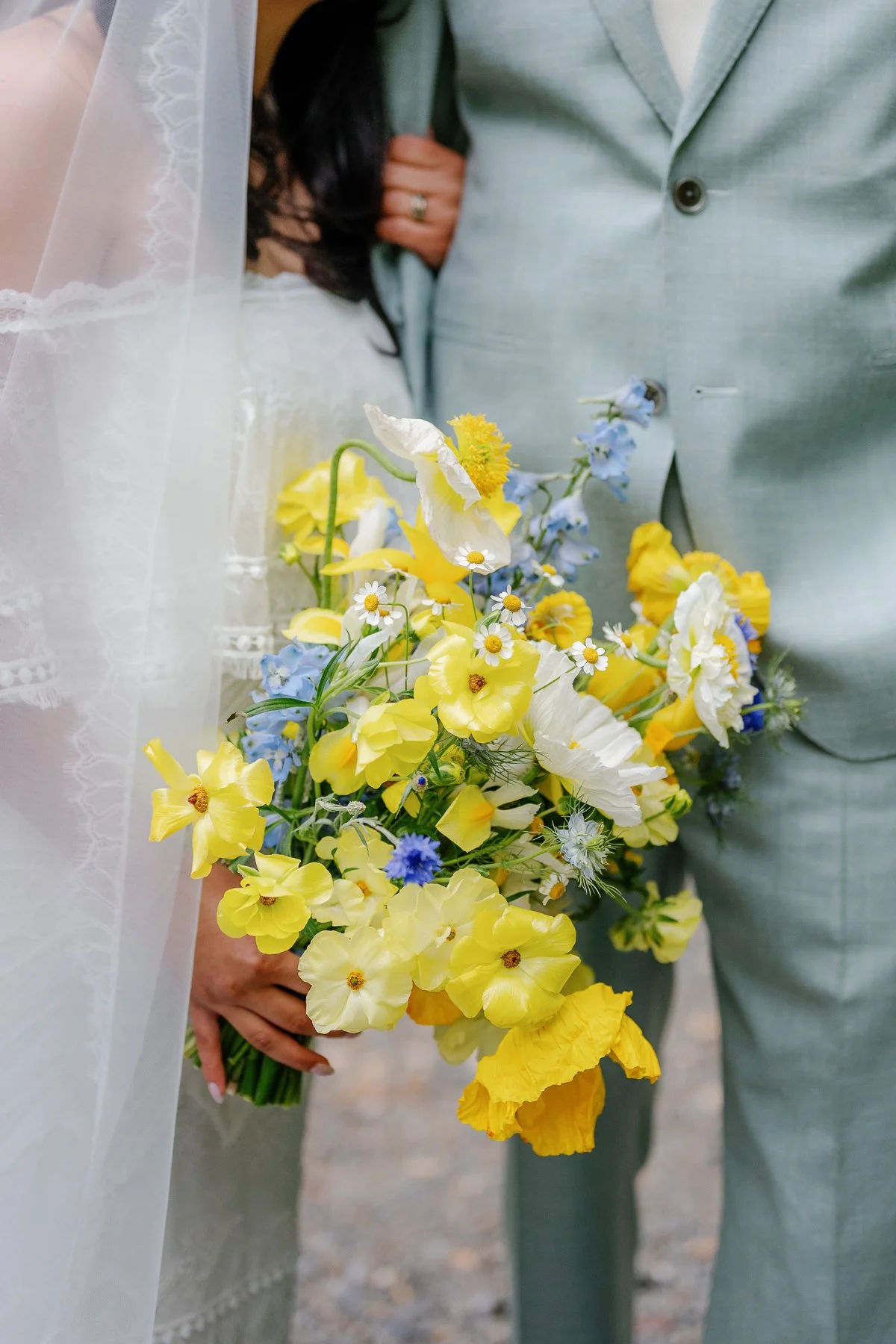
WHY A MICRO WEDDING IS THE PERFECT SETTING FOR A PERSIAN WEDDING IN WASHINGTON DC
The aghd was always designed for intimacy. The couple sits. The family gathers close. Objects are passed, honey is shared, poetry is read aloud. These are not gestures designed for a grand ballroom; they’re gestures designed to be felt by people who are close enough to feel them.
At Tiny Wedding Collective, we plan intimate weddings across Washington DC and the surrounding area - Virginia, Maryland, the national parks, the historic estates, you name it - and the Persian ceremony is one we return to again and again, because it asks of its setting exactly what a micro wedding provides: presence, proximity, and attention.
K and S had an intimate wedding at Wolf Trap, and every single one of them was present for every single moment. That’s not a limitation of a micro wedding, it’s the entire point of one. If you’re considering a micro Persian wedding ceremony in the DC area whether fully traditional, blended with another culture, or adapted to reflect exactly who you are we would love to help you plan it.
The sofreh does not care how many chairs are in the room. It only cares that the objects are chosen with intention, and that the two people sitting before it mean what they say.